
Why Buyers at Canton Fair 2026 Were No Longer Interested in Basic Sweaters
1. What Is a Flat Knitting Machine?
2. Flat Knitting vs Circular Knitting (Why It Matters for Brands)
3. Why Flat Knitting Machines Are Becoming More Important
4. What Can a Flat Knitting Machine Produce?
5. The Real Reason Brands Fail in Knitwear Development
6.Industry Insight: What Buyers Really Care About in 2026
In the context of an increasingly accelerated global apparel supply chain, the knitwear industry is undergoing a significant transformation.
More and more fast fashion brands are no longer focusing only on “price”, but are paying greater attention to:
- Speed of new product launches
- Sampling efficiency
- Consistency of garment fit and sizing
- Ability to respond quickly to small batch orders
At the core of all these changes is one key piece of equipment:
Flat Knitting Machine (Flat Bed Knitting Machine / Fully Fashioned Knitting Machine)
1. What Is a Flat Knitting Machine?
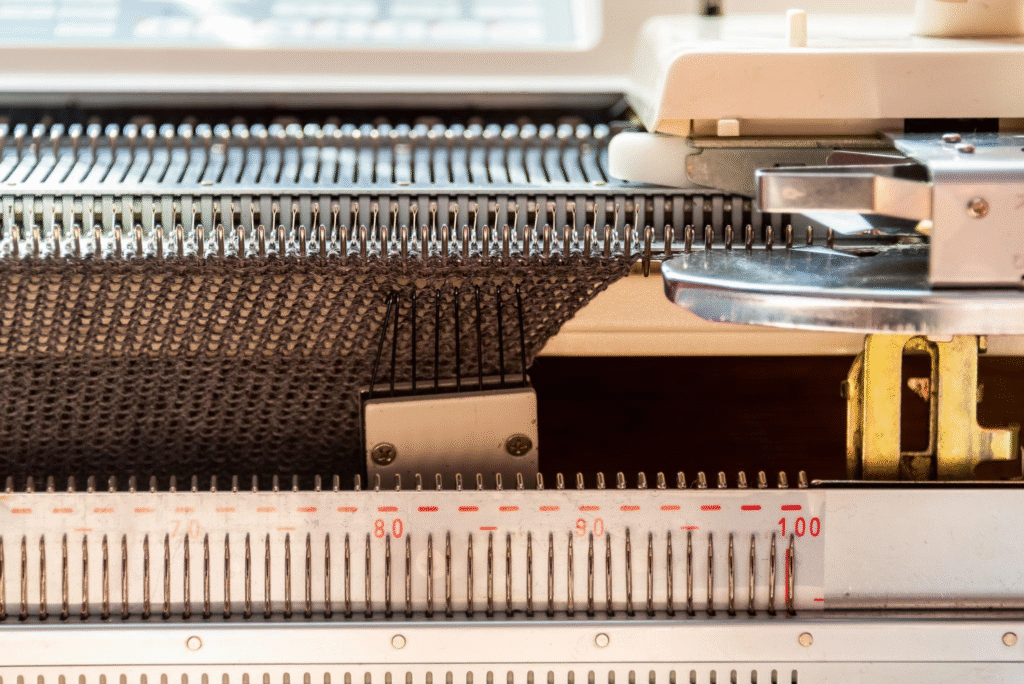
Flat knitting machine is a textile machine that produces knitted fabric in flat panels instead of tubes.
These panels are later assembled into garments such as sweaters.
Simply put:
👉 It “knits pieces, not finished garments”
Typical components produced:
- Front panel
- Back panel
- Sleeves
- Collar parts
Then they are linked together to form a complete sweater.
2. Flat Knitting vs Circular Knitting (Why It Matters for Brands)
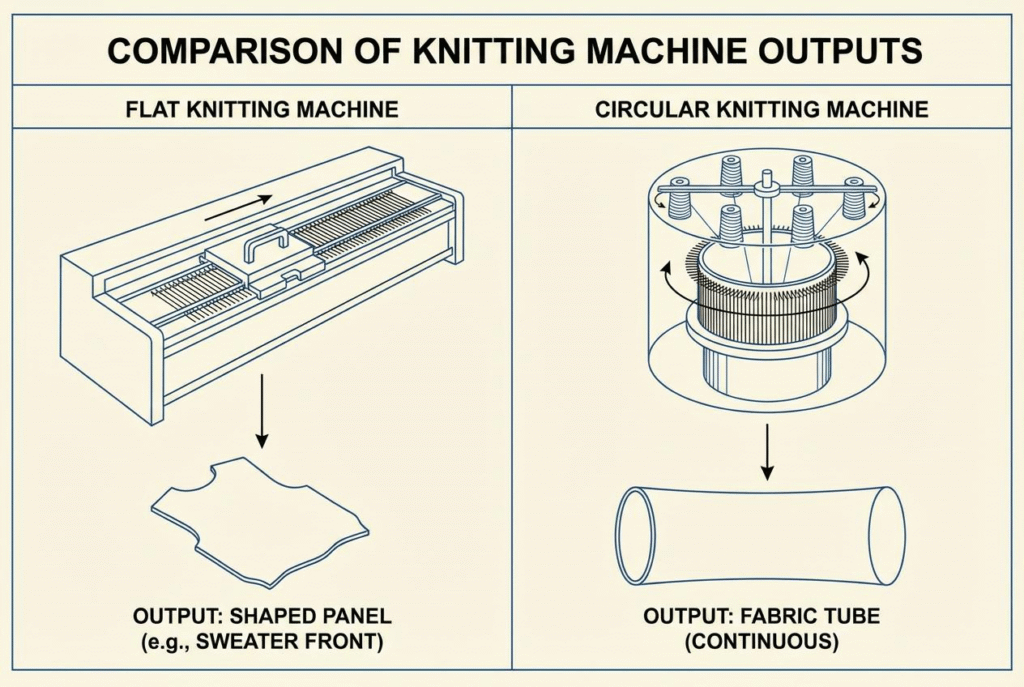
Many buyers confuse these two technologies, but the difference is critical for product strategy.
| Feature | Flat Knitting | Circular Knitting |
|---|---|---|
| Structure | Flat panels | Tube fabric |
| Design flexibility | High | Limited |
| Best products | Sweaters, fashion knitwear | T-shirts, basic knits |
| Pattern complexity | Advanced | Simple |
| Development speed | Fast for sampling | Fast for bulk basics |
Key insight for brands:
- If your product is fashion-driven knitwear → choose flat knitting
- If your product is basic mass basics → circular knitting is enough
3. Why Flat Knitting Machines Are Becoming More Important
Over the past 3–5 years, the global knitwear market has shifted significantly.
Trend 1: Small-batch + Fast reaction is replacing mass production
Fast fashion brands are no longer producing large seasonal orders.
Instead, they now prefer:
- 200–500 pcs per style
- Quick market testing
- Rapid reorders for bestsellers
👉 Flat knitting machines support this model perfectly.
Trend 2: “Design complexity” is becoming a competitive advantage
Consumers now expect:
- Unique textures
- Mixed stitches
- Structured silhouettes
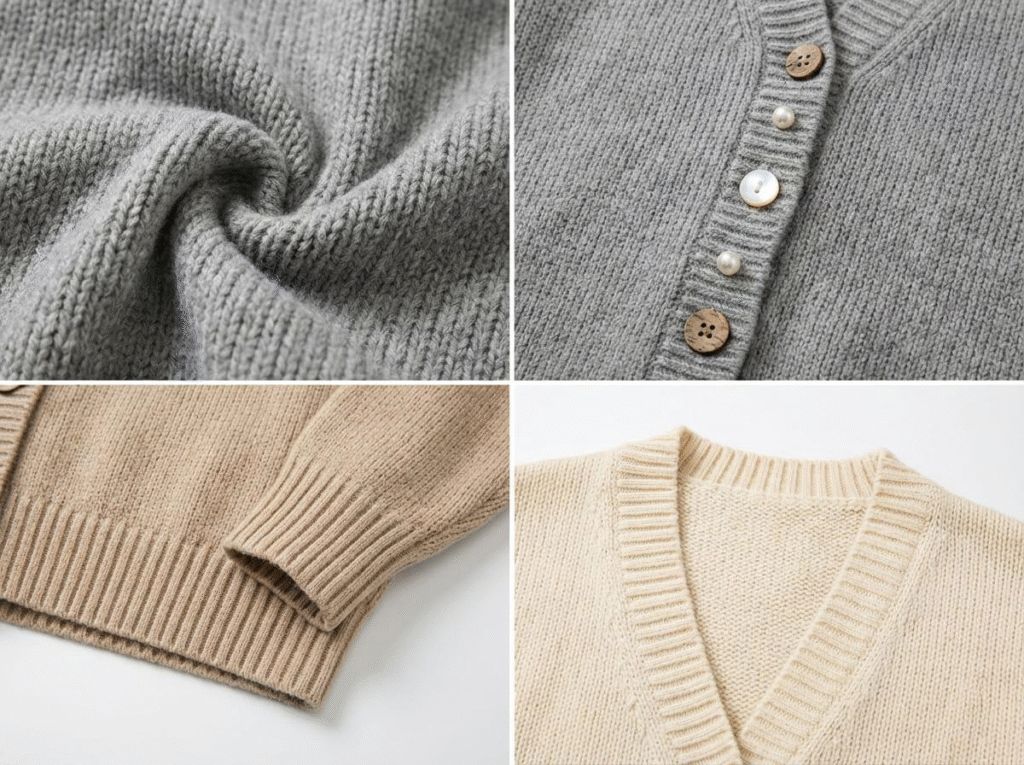
- Fashion-forward knitwear instead of basic sweaters
Flat knitting allows:
- Jacquard patterns
- Cable structures
- Shaping (fully fashioned garments)
Trend 3: Supply chain speed is the new pricing advantage
In many markets (especially Europe & Latin America):
A style that arrives 2 weeks earlier can capture 30–50% more sales volume.
This is why production speed is now more valuable than lowest cost.
4. What Can a Flat Knitting Machine Produce?
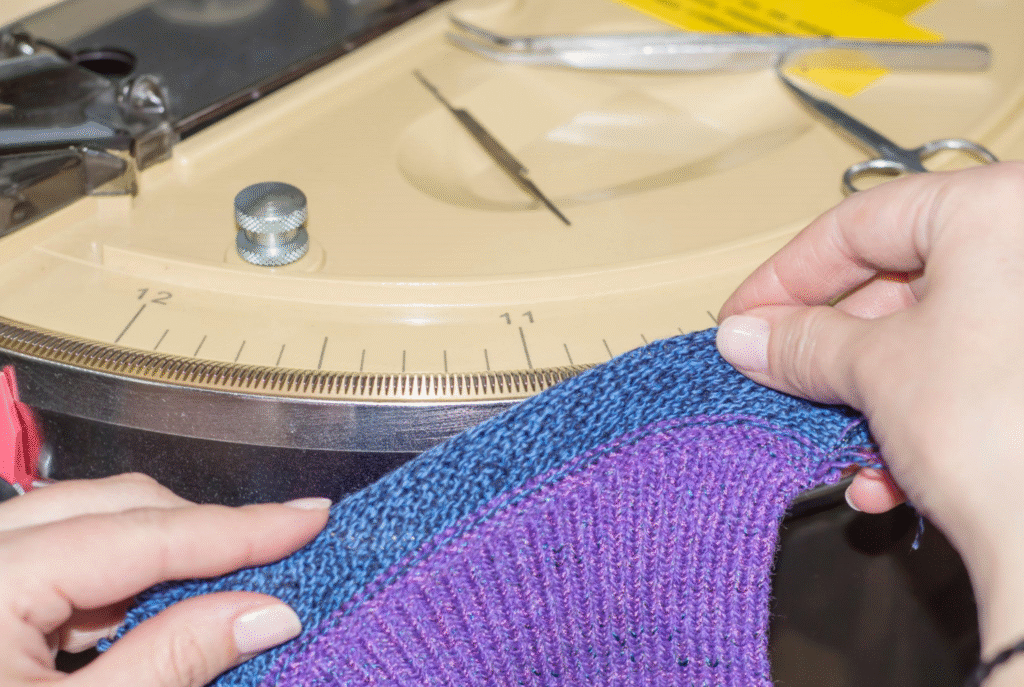
Flat knitting machines are widely used for:
- Sweaters (crew neck, V-neck, polo)
- Cardigans
- Fashion knit tops
- Structured knit dresses
- Intarsia / jacquard knitwear
Why brands prefer it:
Because it allows better control of garment shape and fit.
5. The Real Reason Brands Fail in Knitwear Development
From factory experience (especially in OEM/ODM production), most problems are not machine-related.
They come from communication and development gaps:
Problem 1: Design vs production mismatch
Designers expect visual accuracy, but knitwear requires technical translation.
Problem 2: Yarn and gauge misunderstanding
Different yarns affect:
- elasticity
- shrinkage
- final garment size
Problem 3: Weak sampling iteration
Many brands approve samples too quickly without proper fitting rounds.
6. Industry Insight: What Buyers Really Care About in 2026
Based on current sourcing trends from fast fashion and wholesale buyers:
They care less about:
- Machine type
- Factory size
- Technical terminology
They care more about:
- Can you reduce sampling time?
- Can you guarantee size consistency?
- Can you support small MOQ?
- Can you deliver repeatable bestsellers?
👉 This is where production capability becomes a business tool, not just a technical feature.
7. How YF Industrial Uses Flat Knitting Technology
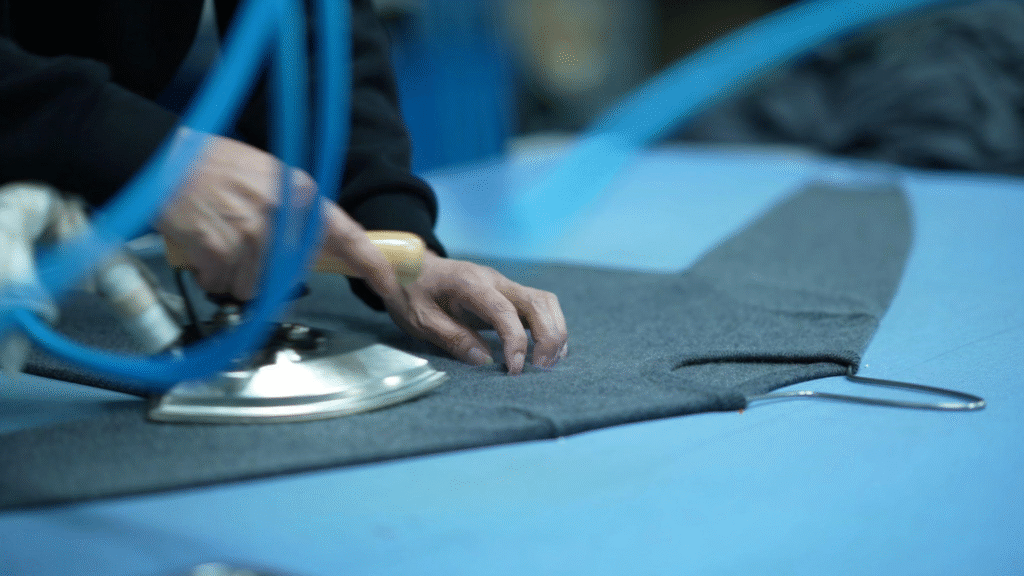
At YF Industrial, flat knitting production is optimized for fast fashion clients.
Our development system includes:
1. Rapid sampling system (7 days average)
From design to sample in under one week.
2. 1-on-1 technical follow-up
Each style is tracked by a dedicated technician:
- knitting program setup
- sample adjustment
- fitting correction
3. Pre-production validation
Before bulk production:
👉 All sizing and structure are confirmed to avoid deviation
8. Future Outlook: Where Flat Knitting Is Heading
The next stage of flat knitting is not just automation—it is integration.
We are seeing three major directions:
1. Digital knitting + AI programming
Reducing manual programming errors.
2. Faster sampling cycles
From 7 days → 3–5 days becoming standard.
3. More micro-collection production
Brands shifting from seasonal drops → weekly drops.
Conclusion
Flat knitting machines are no longer just manufacturing equipment.
They represent a new way of thinking in fashion supply chains:
From “mass production” → to “fast validated fashion”
For brands, the real value is not the machine itself, but what it enables:
- Faster market entry
- Lower inventory risk
- Higher hit-rate of bestsellers