In the global knitwear industry, quality consistency is no longer a competitive advantage — it is a basic requirement. For fashion brands, importers, and distributors, choosing the right knitwear manufacturer means finding a partner that can deliver stable quality across seasons, styles, and order volumes.
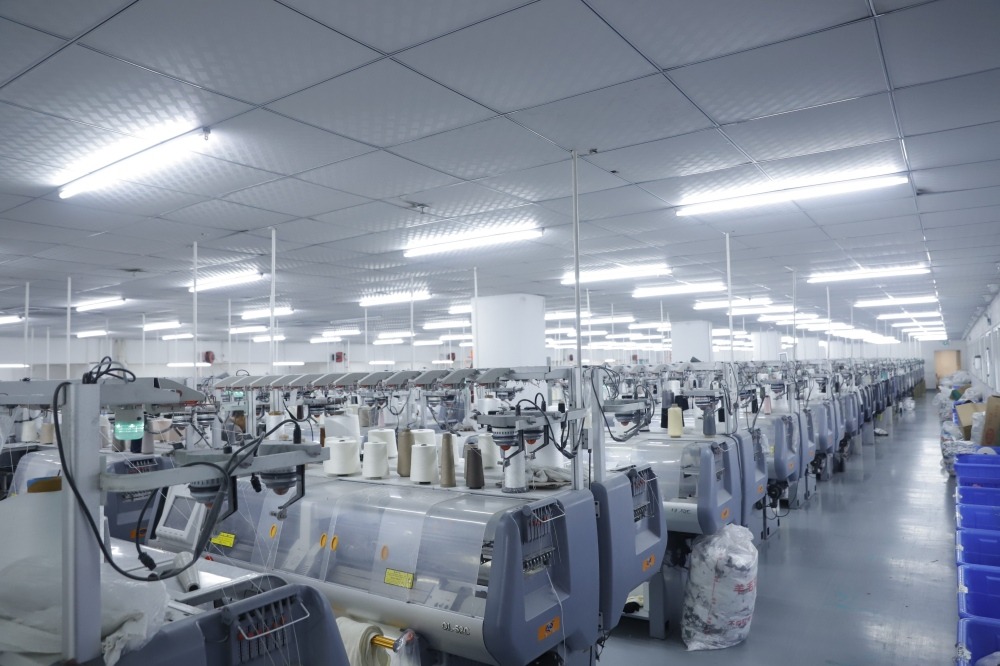
YF INDUSTRIAL (Guanezhou YF Industrial Apparel Co,Ltd.), founded in 2000, is a professional knitwear manufacturer with a fully integrated factory system. To ensure reliable and repeatable quality, YF INDUSTRIAL has built a comprehensive systematic quality management system that covers every stage of knitwear production.
This article explains how YF INDUSTRIAL uses process-driven quality control to support stable and scalable OEM and ODM knitwear manufacturing for global markets.
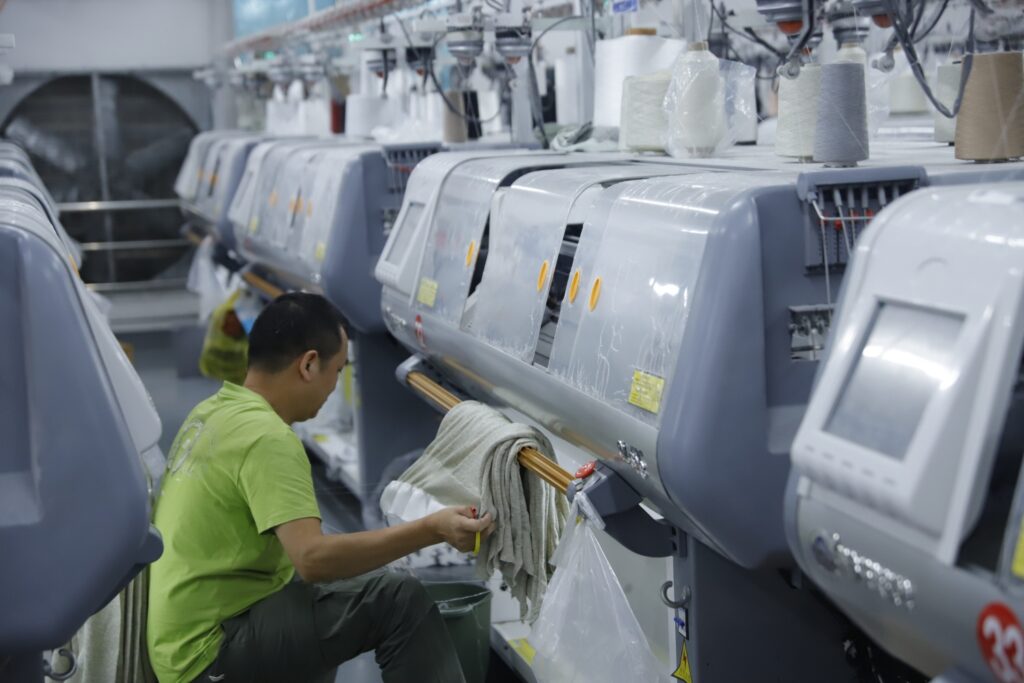
Compared with woven garments, knitwear is more sensitive to variables such as yarn quality, knitting tension, finishing methods, and washing conditions. Common risks in sweater production include:
Unpredictable shrinkage after washing
Early-stage pilling
Color inconsistency between batches
Performance variation caused by yarn instability
If these issues are only discovered at the end of production, they often lead to:
large-scale rework
delivery delays
customer complaints
brand risk
Therefore, YF INDUSTRIAL quality control is not a final inspection step. Instead, it is based on critical control points (CCP) throughout the entire production process
YF INDUSTRIAL’ Systematic Quality Management Workflow
1. Input Control: Raw Material and Yarn Verificatio
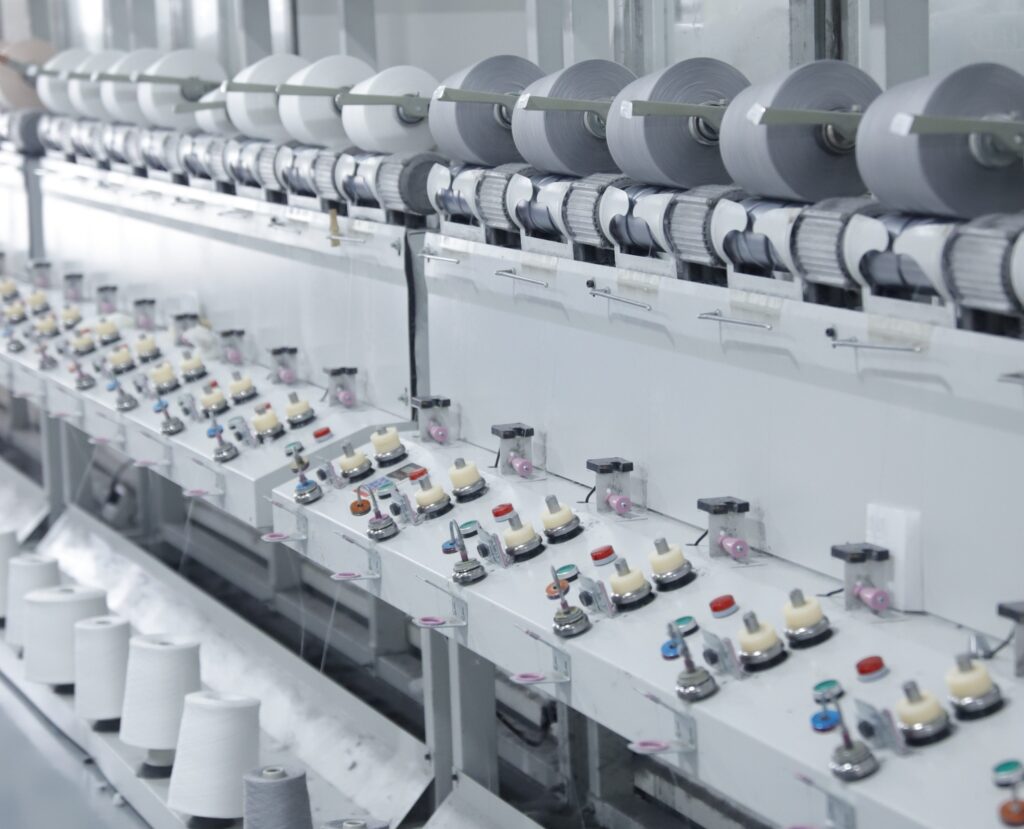
Quality control starts with raw materials. Every batch of yarn and fabric entering production must meet strict standards, including:
consistent fiber composition and blend ratios
yarn strength and uniformity
color consistency and hand-feel
batch-to-batch stability
CIS records all material data and cross-checks them against order requirements to ensure input materials align with design and performance expectations.
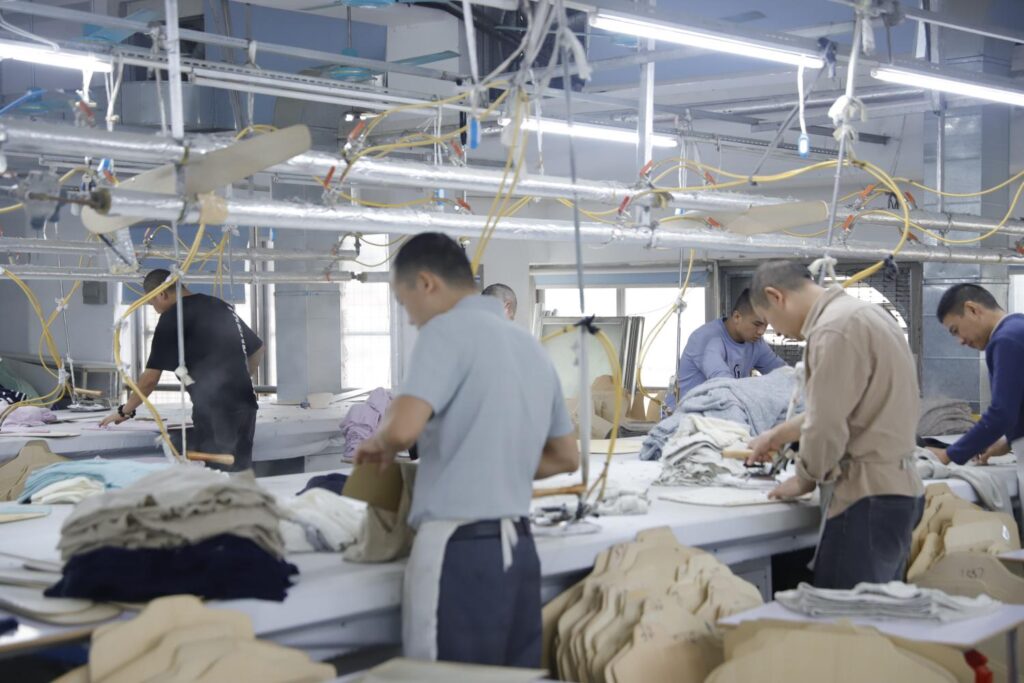
2. Process Control: Key Control Points During Production
Knitwear production includes multiple critical stages, each potentially affecting final garment quality. YF INDUSTRIAL sets standardized control points at each stage, including:
Knitting: controlling gauge, tension, and machine parameters to prevent uneven fabric density or stitch instability
Dyeing: monitoring temperature, time, and dye liquor ratios to ensure consistent color and fastness
Washing/Finishing: controlling wash parameters and temperatures to minimize shrinkage risks
Pressing and Shaping: ensuring stable fabric hand-feel and garment silhouette
This control system forms a closed loop:
detect → adjust → record → prevent recurrence.
3. Output Verification: Final Garment Quality Confirmation
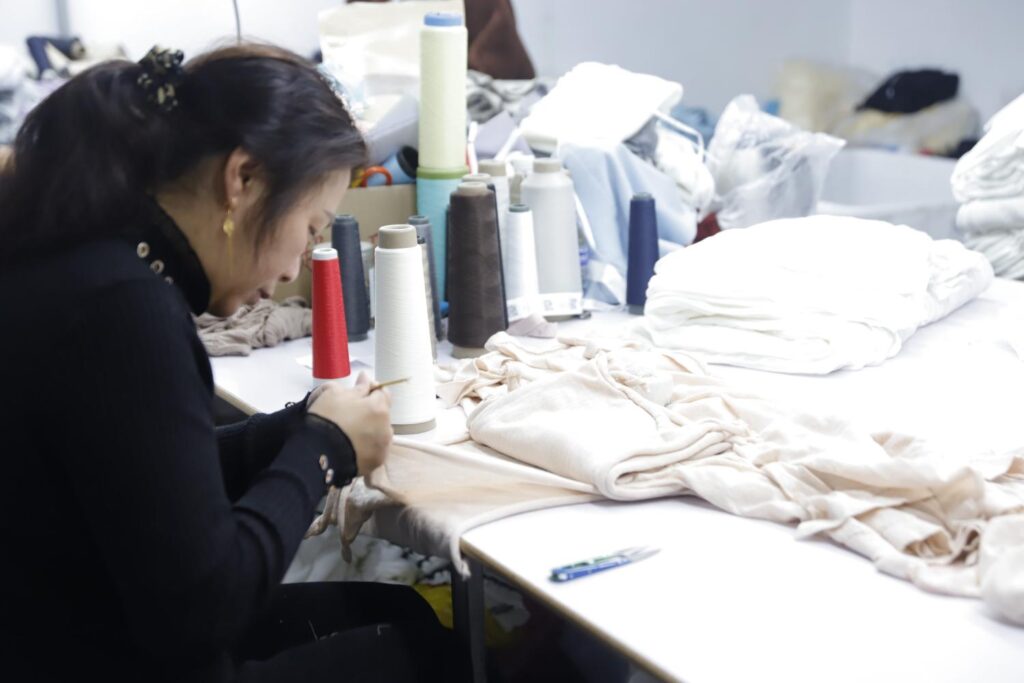
Before shipment, YF INDUSTRIAL conducts systematic verification for each batch, including:
dimensional accuracy and consistency
color and shade control
shrinkage and wash performance
pilling resistance and durability
labeling and compliance checks
All results are linked to the order, batch, and production line to ensure full traceability
Key Quality Indicators: How YF INDUSTRIAL Controls Knitwear Performance
Pilling Control
Pilling is one of the most common issues in knitwear, especially for wool, cotton blends, and viscose materials. YF INDUSTRIAL controls pilling through:
selecting appropriate yarn structure and fiber combinations
optimizing knitting density and tension
improving finishing processes to enhance surface stability
using process data for continuous improvement
These systematic measures effectively reduce pilling risk and improve garment durability.
Shrinkage Control
Shrinkage is a major factor affecting knitwear quality. YF INDUSTRIAL controls shrinkage by:
designing controllable yarn structures
setting strict wash process parameters
applying differentiated treatment for different fabrics
establishing shrinkage monitoring during production
This ensures that garment size changes remain within acceptable limits and meet international buyer requirements.
Color Consistency Control
Color consistency is a major challenge in knitwear due to:
dye batch differences
machine parameter fluctuations
yarn absorption differences
YF INDUSTRIAL ensures consistent color through standard color samples, strict dyeing process control, and comprehensive process records, ensuring each batch stays within acceptable tolerance.
How YF INDUSTRIAL’ Quality Management System Supports Global Buyers
Faster Development Decisions
Pre-production confirmation of materials and processes reduces trial-and-error costs.
Greater Supply Chain Control
Data traceability enables quick identification of quality issues and root causes.
Lower Brand Risk
Systematic quality control reduces customer complaints and increases order stability.
Better Scalability
When order volume increases, the quality system can replicate consistent output across multiple batches.
Conclusion: Systematic Quality Management is the Core Competitiveness in Knitwear Manufacturing
At YF INDUSTRIAL, quality control is not a final checkpoint — it is an integral part of the knitwear manufacturing system.
Through input control, process control, output verification, and traceable data management, YF INDUSTRIAL provides global clients with stable, reliable, and scalable knitwear production services.
For brands seeking long-term cooperation, choosing a knitwear manufacturer with a systematic quality management system means lower risk, higher efficiency, and more predictable supply chain performance.